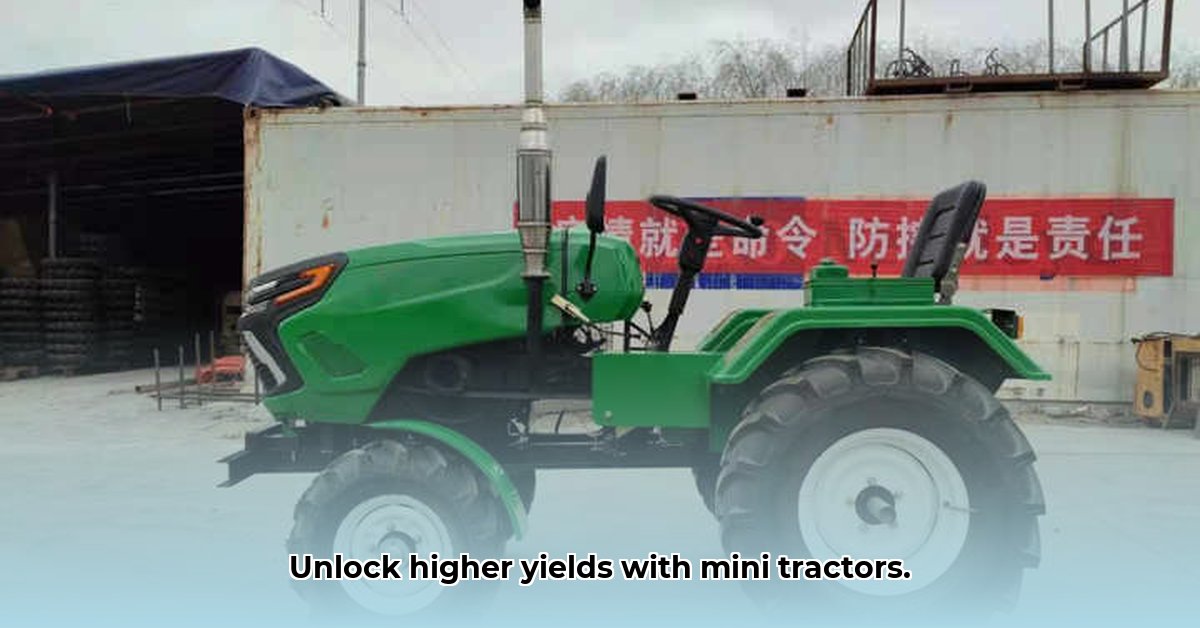
Understanding the Rise of Chinese Mini-Tractors in Sustainable Agriculture
Sustainable agriculture demands efficient and affordable mechanization, particularly for smallholder farmers. Chinese mini-tractors are rapidly gaining traction, offering a compelling blend of affordability and versatility. Their lower price point compared to Western counterparts makes them accessible to farmers previously unable to afford mechanization, fostering increased productivity and potentially improving sustainability. However, a balanced assessment requires considering both the advantages and limitations of these machines. For more detailed information on specific models, check out this helpful resource.
Advantages: Affordability, Efficiency, and Versatility
The primary benefit of Chinese mini-tractors is their unmatched affordability. This accessibility empowers small-scale farmers to mechanize operations, leading to significant productivity gains. Studies suggest productivity increases of up to 30% in vegetable farming with mini-tractor adoption. This increase is largely attributed to faster task completion and reduced labor requirements. Furthermore, their versatility is a key strength. A wide array of attachments, including plows, cultivators, and sprayers, makes them adaptable to various farming tasks. Many models boast fuel efficiency, minimizing operating costs and reducing the environmental footprint compared to larger tractors. This fuel efficiency contributes to their overall economic sustainability.
Challenges and Limitations: Durability, Quality Control, and Environmental Impact
While affordability is a significant advantage, concerns regarding durability and standardized quality control persist. The market features a wide range of manufacturers with varying levels of quality, increasing the risk of purchasing a less durable tractor with frequent repair needs. The long-term cost implications of such repairs could offset the initial cost savings. Furthermore, a lack of comprehensive data on the environmental impact throughout the entire life cycle of these tractors (from manufacturing to disposal) presents another challenge. Life Cycle Assessment (LCA) studies are crucial to fully quantify their sustainability. Choosing reputable suppliers with proven track records and warranties is paramount to mitigating these risks.
Sustainable Practices and Mini-Tractor Integration
The integration of Chinese mini-tractors can significantly enhance sustainable farming practices. Their smaller size and weight result in reduced soil compaction, a major contributor to soil health. This is particularly beneficial for organic farming and long-term soil fertility. Using these tractors with precision farming techniques, such as GPS-guided implements, allows for optimized use of water and fertilizers, minimizing waste and environmental impact. This precision translates to better resource management and reduced chemical runoff. The combined effect promotes enhanced soil health and overall ecosystem sustainability.
Actionable Steps for Stakeholders
The successful integration of Chinese mini-tractors necessitates coordinated action from various stakeholders.
Farmers: Thoroughly research different brands, prioritizing ease of maintenance and repair. Consider group buying to leverage better prices. Long-term investment in GPS technology for precision farming is beneficial.
Suppliers: Implement robust quality control processes, partner with suppliers of environmentally sustainable parts, and invest in R&D to improve fuel efficiency and reduce emissions.
Governments & NGOs: Support programs aiding farmers in procuring machinery, provide training on efficient use and maintenance, and fund recycling programs for old tractors. Direct investment in technology transfer initiatives is also crucial.
Researchers & Academics: Conduct comprehensive LCAs of different mini-tractor models and establish industry-wide standards for durability and emissions. Develop a clear rating system to guide farmers on the environmental and economic performance of different brands.
Conclusion: A Path Towards Sustainable Agricultural Mechanization
Chinese mini-tractors offer considerable potential for advancing sustainable agriculture, particularly amongst smallholder farmers. Their affordability and versatility are undeniable advantages. However, the need for improved quality control, standardized data on long-term durability and environmental impact, and further research remains crucial. By addressing these challenges and fostering collaboration between stakeholders, the full potential of Chinese mini-tractors for sustainable and economically viable farming can be realized.
Resources
- [Link to a reputable agricultural machinery review website] (Example: A website providing reviews and comparisons of agricultural machinery)
- [Link to a government agency supporting sustainable agriculture] (Example: A government website offering information and resources on sustainable agricultural practices)
- [Link to a relevant NGO promoting sustainable farming] (Example: A website for a non-governmental organization focusing on sustainable agriculture)